FlyWP
Docker-based cloud server control panel for WordPress, now also PHP, Laravel and JavaScript sites, for developers and agencies.
What it is
FlyWP is a cloud server control panel built for WordPress. You connect a server from a cloud provider, or let FlyWP run one for you, and manage every site on it from one dashboard: provisioning, SSL, caching, backups, security, migrations and team access.
The difference is under the hood. Every site runs in its own Docker container, so one compromised or overloaded site does not take its neighbours down. Developers get a real server with SSH, WP-CLI and Git deploys. Agencies get one place to run dozens or hundreds of client sites without paying for shared-hosting limits.
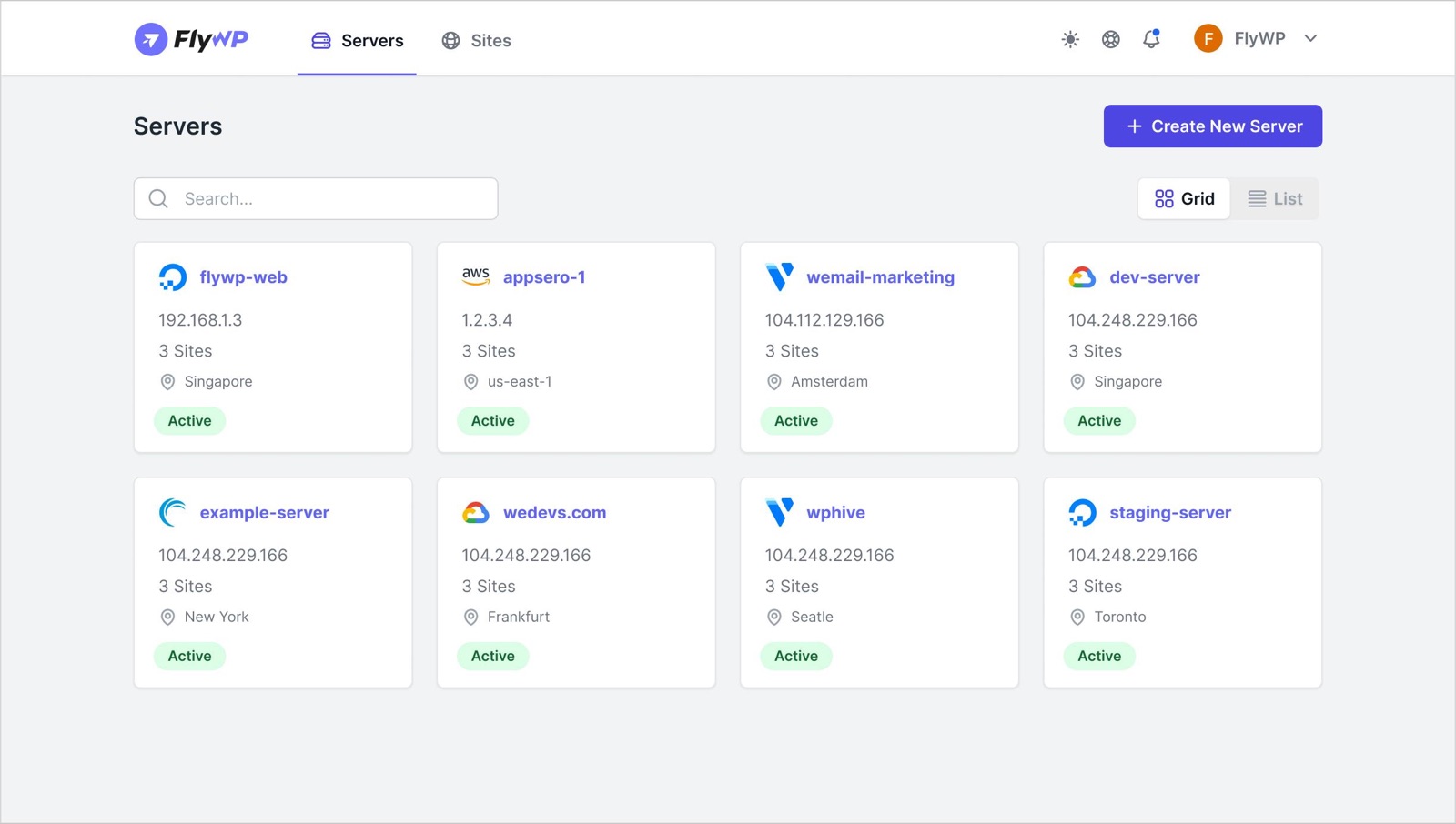 The servers view: every connected server, its region and how many sites it runs. Source: Product Hunt, FlyWP gallery
It serves two groups: developers and agencies who bring their own server and want control without writing Nginx configs by hand, and site owners who want managed hosting without learning server work.
The problem it solves is a familiar one. Shared hosting is cheap but crowded and slow to scale. Managed WordPress hosting is easy but expensive per site, and the bill climbs as an agency adds clients. Running your own VPS is cheap and fast but needs someone who knows Linux, PHP tuning, firewalls and backups. FlyWP puts a product layer on top of that last option, so the cost stays close to raw server pricing while the daily work feels like managed hosting.
Since August 2026 it also hosts Laravel, PHP and Symfony apps, and since September 2026 Next.js, Nuxt and Astro sites via Git. A small companion plugin, FlyWP Helper, sits inside each WordPress site and exposes cache controls and optimisation settings in wp-admin.
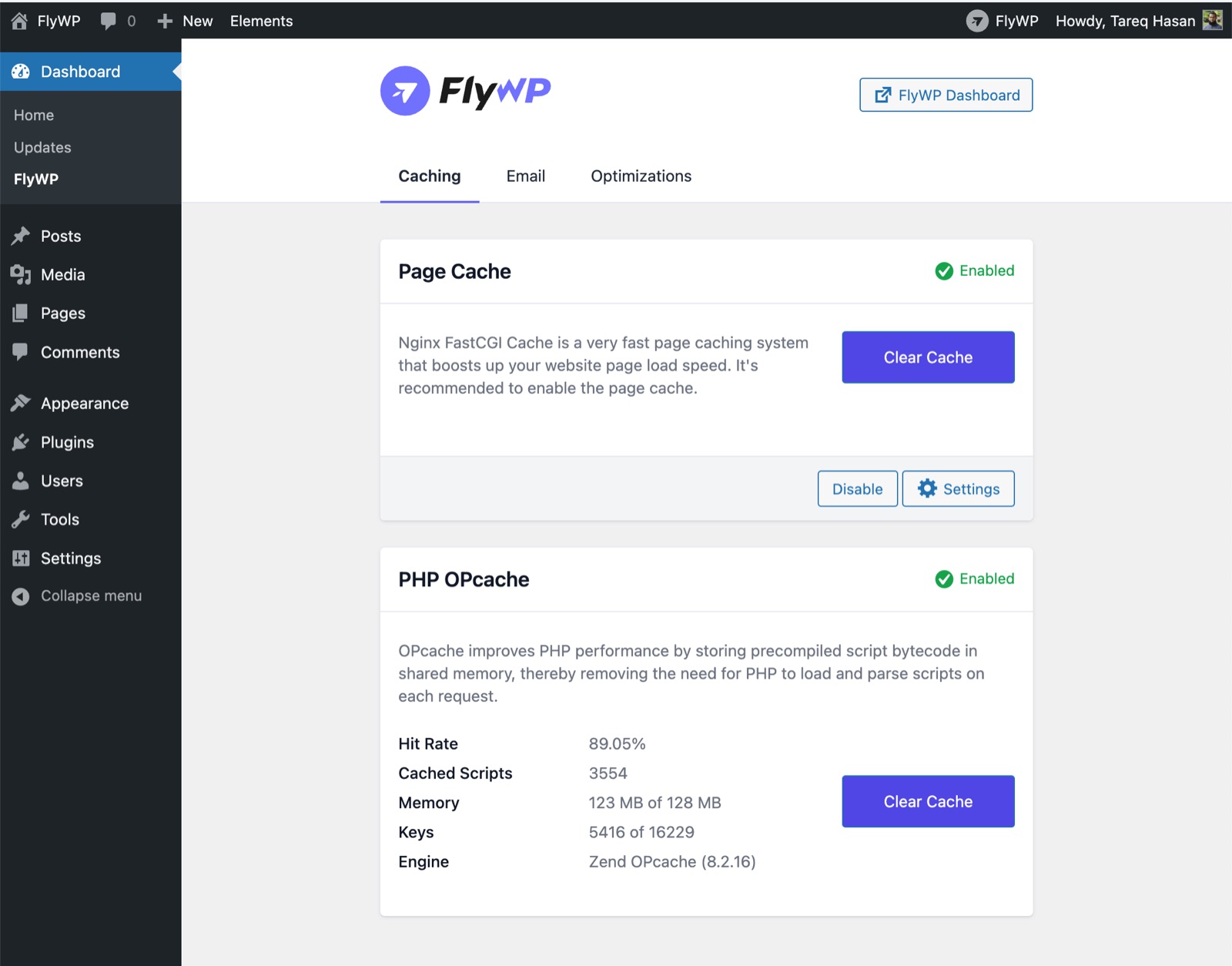 FlyWP Helper inside WordPress: page cache and OPcache controls without leaving wp-admin. Source: WordPress.org, FlyWP Helper
Industry
WordPress powers a large share of the web, and most of it sits on shared hosting or managed WordPress hosts. Between those two is the server control panel market: tools that give you your own cloud server with managed-hosting convenience on top. Agencies like it because costs stay flat as sites grow.
The space is competitive. GridPane, SpinupWP and RunCloud are the names FlyWP is most often compared with, and newer tools keep arriving. The contest is won on reliability, security defaults, provider coverage and price per server, not on feature count.
Two shifts shape the market now. Customers expect server-level protection and fast patching for vulnerable plugins, not just a security plugin. And agencies rarely run only WordPress: the same team ships Laravel apps and JavaScript front ends, and does not want a second hosting tool.
What happened
FlyWP came out of weDevs in 2023. Its companion plugin reached WordPress.org in May 2023. In November 2023 it was introduced publicly with tiered per-account plans and lifetime deals, the 7G firewall, Nginx, Redis and Docker isolation. The public changelog started in December 2023, and it launched on Product Hunt on 6 March 2024, finishing #5 Product of the Day.
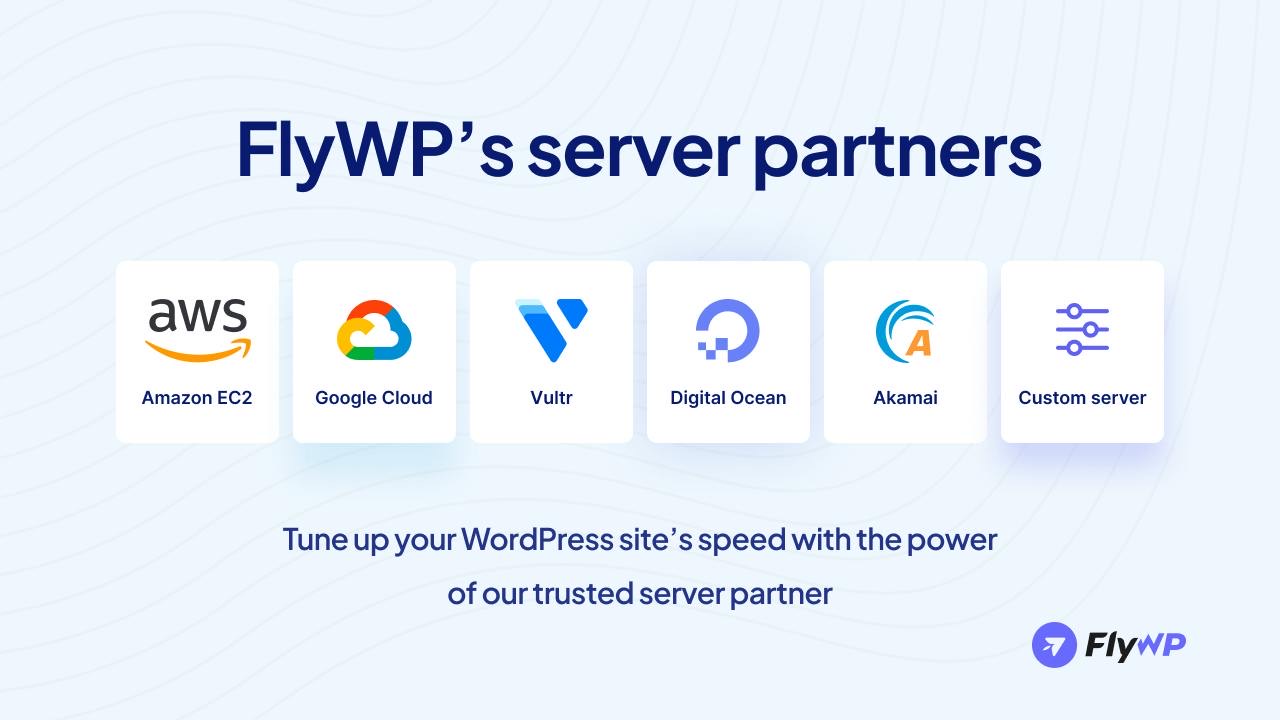 Provider coverage at the time of the Product Hunt launch. Hetzner followed in May 2024. Source: Product Hunt, FlyWP gallery
Through 2024 and 2025 the team built out the core panel: Git deploys, server provisioning from inside FlyWP, ARM support, Hetzner and Akamai, OpenLiteSpeed as a second web server, migration from any host, Site Blueprints, a browser terminal, a vulnerability scanner, the 8G Firewall and a Public API.
In March 2026 FlyWP replaced its tiered account plans with usage-based pricing per server and launched customisable managed hosting, where one bill covers both the server and the panel.
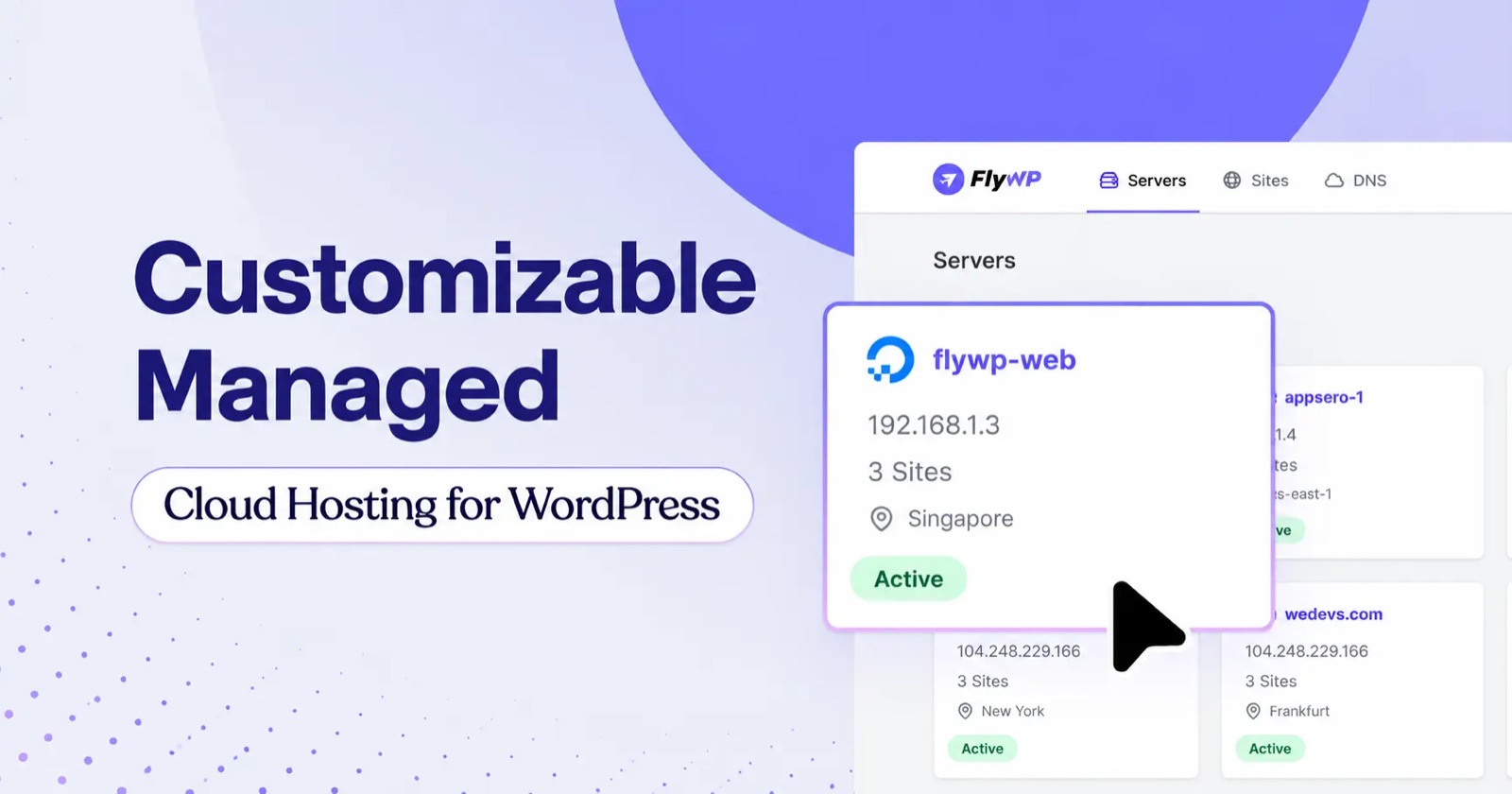 Customisable managed hosting, launched with the March 2026 pricing change. Source: FlyWP
I took over FlyWP as Product Manager in April 2026, right after that pricing change. The panel was already capable. The question was where to go next with a product that had a loyal developer base, a new managed offer and strong competitors. Since then the work has moved in three directions:
- Security as a product, not a checkbox. Passkeys (Jul 2026), FlySecurity Pro powered by Patchstack (Jul 2026), which adds virtual patching for known plugin and theme vulnerabilities without an extra plugin on the site, and a Daily Vulnerability Digest (Jul 2026).
- Beyond WordPress. Laravel, PHP and Symfony apps (Aug 2026), then Next.js, Nuxt and Astro deployment via Git (Sep 2026) and Static Site Publishing (Oct 2026).
- Running many sites at once. Global Blueprints (May 2026), Bulk Migration, Fleet Dashboard and Activity Log (Aug 2026), granular team roles (Aug 2026), and Server Monitoring with Slack alerts (Oct 2026).
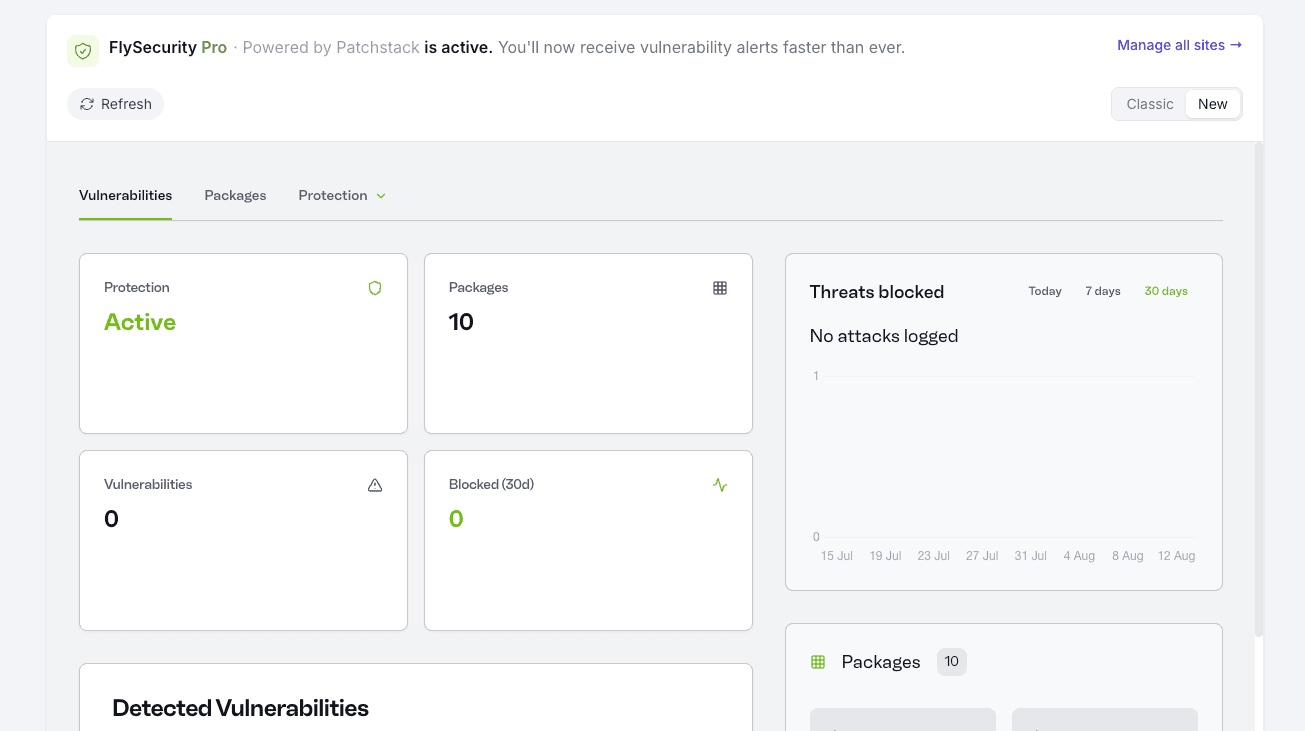 FlySecurity Pro, powered by Patchstack: protection status and blocked threats per site. Source: Patchstack
Impact
- 5k+ active client sites managed through FlyWP (CV, 2026).
- 17 versioned releases on the public changelog from late April to mid-October 2026 (v2026.39 to v2026.55), roughly one every 10 to 11 days.
- 4,000+ active installs of the FlyWP Helper plugin on WordPress.org (October 2026).
- 4.5/5 average rating across Trustpilot, G2, WordPress.org and WPHive, as shown on flywp.com (October 2026).
- Security partnership with Patchstack, announced on Patchstack’s blog in August 2026.
- Scope widened from WordPress only to WordPress plus Laravel, PHP, Symfony, Next.js, Nuxt, Astro and static sites between August and October 2026.
Stack
- Docker, one isolated container stack per site
- Nginx (FastCGI cache, HTTP/3) and OpenLiteSpeed
- PHP (multiple versions, up to 8.5), OPcache, Redis object cache, MySQL
- Ubuntu LTS servers (26.04 from September 2026), Supervisor daemons, WP-CLI, browser terminal and Server CLI
- Providers: DigitalOcean, Vultr, AWS, Google Cloud, Akamai (Linode), Hetzner, plus any custom VPS
- Cloudflare (DNS, Origin CA certificates), Let’s Encrypt SSL
- Backups to Amazon S3, DigitalOcean Spaces, Cloudflare R2, Wasabi, Google Drive and pCloud
- Patchstack (FlySecurity Pro), Postmark and Mailgun, Slack notifications
- Public REST API, Git deploys (including Bedrock, Laravel, Next.js, Nuxt, Astro)
How I shaped it
- Own the product roadmap across bring-your-own-server and managed hosting, balancing developer depth against the needs of agencies and less technical site owners.
- Widened who FlyWP is for. Laravel, PHP and JavaScript framework hosting shipped while I owned the product, so teams can run their non-WordPress projects on the same servers instead of paying for a second tool.
- Made security a paid layer on a free base. Scanning and firewall stay in the core panel; FlySecurity Pro with Patchstack adds virtual patching for teams that need more. That gives the free tier a credible safety story and gives agencies a clear reason to upgrade.
- Built for agencies at scale. Bulk Migration, Fleet Dashboard, team roles and monitoring alerts target the customer running many client sites, not one.
- Work with engineering on architecture choices, such as Docker isolation, new frameworks and providers, framing each one as a customer problem with a clear scope.
- Write PRDs and use product data (PostHog drop-off and feature adoption) to decide what to build next and what to iterate on.
- Plan pricing and releases for a developer and agency audience, building on the per-server model introduced in March 2026.
- Report product health monthly and quarterly to leadership, so FlyWP’s priorities are set alongside the rest of the weDevs portfolio.
How it moved on
- May 2023: FlyWP Helper plugin published on WordPress.org
- Nov 2023: introduced publicly by weDevs with tiered plans and lifetime deals; 7G firewall, Nginx, Redis, Docker isolation
- Mar 2024: Product Hunt launch, #5 Product of the Day
- Apr to Aug 2024: server provisioning, ARM, Hetzner, OpenLiteSpeed, team permissions
- Jan to May 2025: cross-server cloning, Server CLI, Uptime Monitor, migration from any host (beta)
- Jul to Sep 2025: Site Sleep, Site Blueprints, Redirect Manager, browser terminal, Cloudflare DNS
- Oct to Dec 2025: Integrity Checker, Vulnerability Scanner, 8G Firewall, Bad Bot Blocker, Public API, Akamai provisioning
- Mar 2026: PHP 8.5, usage-based per-server pricing and customisable managed hosting
- Apr to May 2026: Cloudflare Origin CA certificates, HTTP/3, Global Blueprints
- Jul 2026: passkeys, Global Search, FlySecurity Pro powered by Patchstack, Daily Vulnerability Digest
- Aug 2026: Bulk Migration, Laravel, PHP and Symfony support, Fleet Dashboard, Activity Log, full Clone and Transfer
- Sep to Oct 2026: Next.js, Nuxt and Astro via Git, Ubuntu 26.04 LTS, Static Site Publishing, Server Monitoring with Slack alerts
Links
- FlyWP: official website
- Pricing: free tier, bring-your-own-server and managed plans
- Documentation: setup, providers, security and deployment guides
- Public API docs: REST API reference
- Changelog: every release since December 2023
- New pricing model (Mar 2026): the move to per-server pricing and managed hosting
- White label programme: reseller waitlist
- FlyWP Helper on WordPress.org: the companion plugin
- Product Hunt: March 2024 launch, #5 Product of the Day
- Patchstack: FlyWP adds vulnerability protection: FlySecurity Pro partnership (Aug 2026)
- Appsero: FlyWP introduced: weDevs launch announcement (Nov 2023)
- WordCamp Sylhet 2026: FlyWP as Platinum Sponsor (Oct 2026)