Mobile apps
Four white-label shopping, vendor and delivery apps that put WooCommerce stores and Dokan marketplaces on iOS and Android without a mobile team.
 The new Dokan Vendor app, announced in August 2026. Source: Dokan blog
What it is
Four white-label mobile apps for store and marketplace owners on WooCommerce. Each one is sold as a done-for-you service. The owner buys a licence and shares their store details. The team builds the app under the owner’s name and logo, publishes it to the App Store and Google Play, and keeps it updated. Shoppers never see our branding.
The problem is the same for all four. A small online business can see most of its traffic arrive on phones, but a custom native app is a large, slow and expensive project. It needs designers, mobile developers, store accounts, review cycles and ongoing updates every time iOS or Android changes. Most WooCommerce merchants cannot justify that. These apps give them a real app on the home screen, synced with the store they already run, without hiring a mobile team.
Dokan Customer app
The shopping app for a Dokan multivendor marketplace. Customers browse featured, best-selling, top-rated and new products, explore categories and vendor stores, and shop across many vendors in one cart. They pay with any WooCommerce or Dokan gateway, including Stripe Connect, Google Pay and Apple Pay. They track orders, get notifications and keep wishlists. The app supports many languages and right-to-left scripts, which matters for marketplaces in the Middle East and South Asia.
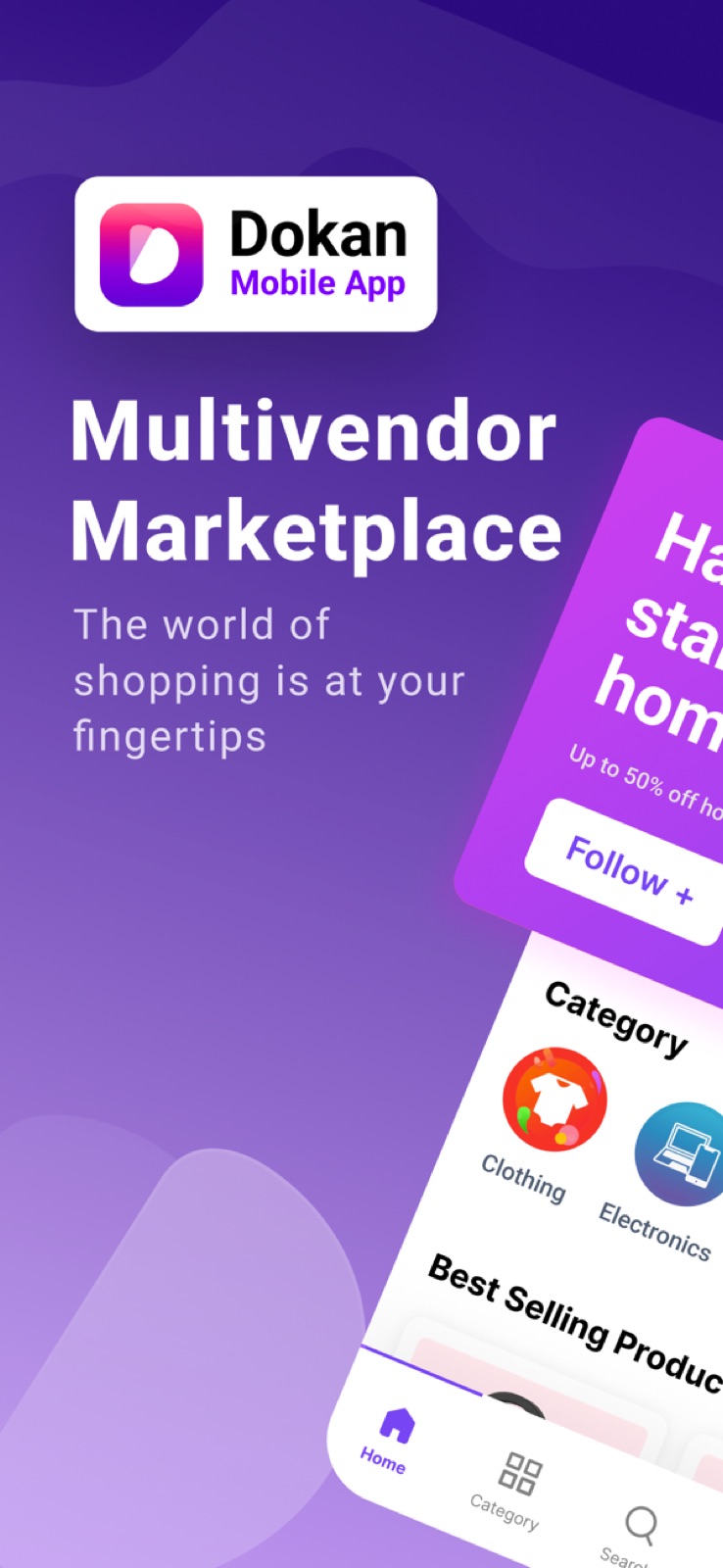 The Customer app home: categories, best sellers and vendor promotions. Source: App Store
Dokan Vendor app
A full vendor dashboard on a phone, built for marketplace owners to hand to their sellers (product page). Vendors see each order as it lands, with billing, shipping, items and totals. They update order status, create shipments and write notes for buyers. They edit product names, descriptions, prices, stock and images, and pull photos from the WordPress media library. They check sales, commissions and payouts, answer product questions and support requests, handle returns and warranty claims, track reviews, badges and followers, and give staff their own roles and permissions.
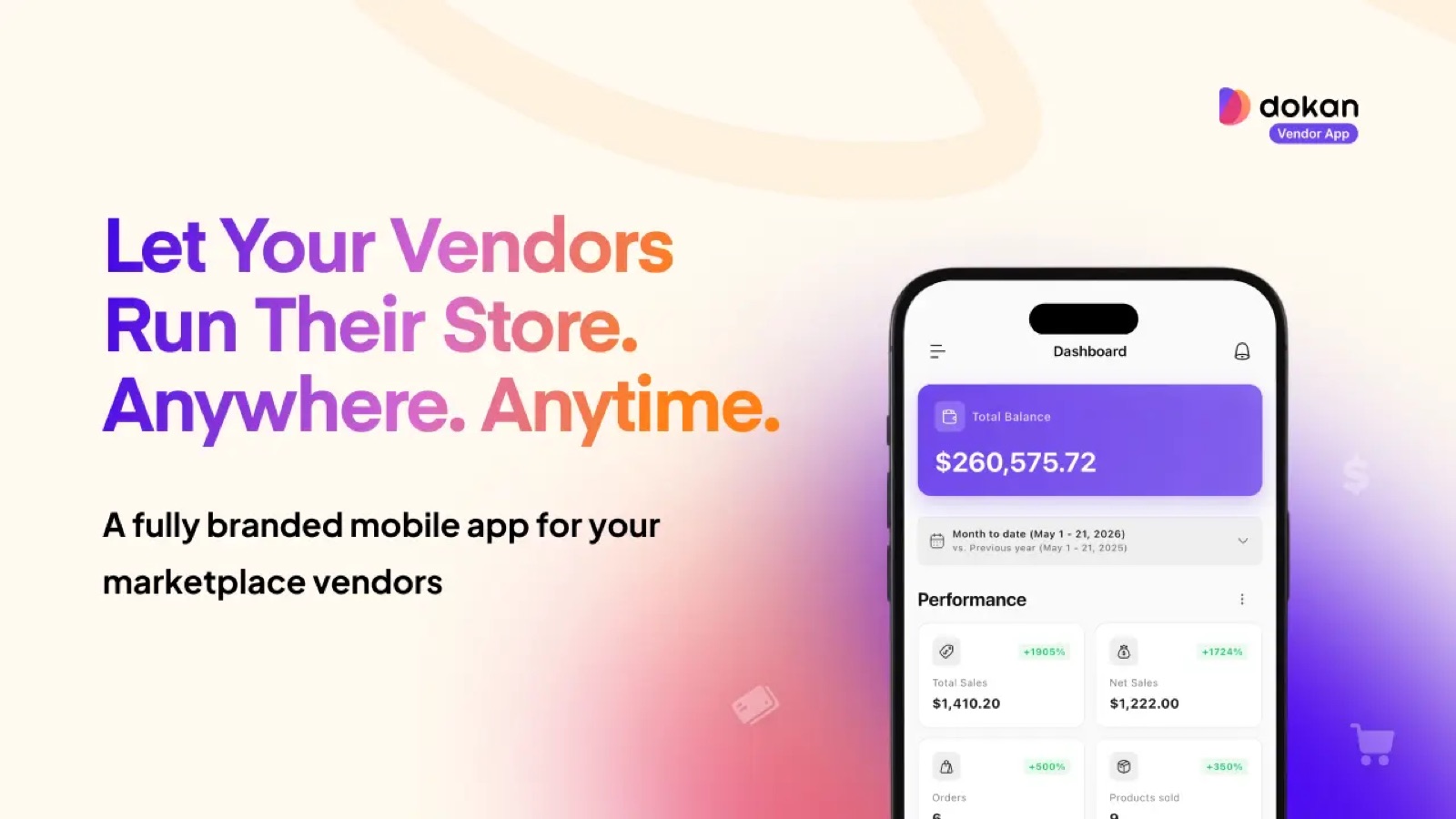 The vendor dashboard: balance, sales, orders and products sold at a glance. Source: Dokan
Dokan Delivery Driver app
For marketplaces that run their own last-mile delivery (product page). Drivers go online or offline, get pop-up delivery invitations they can accept or reject, follow Google Maps routes sorted by drive time, and move each order through six statuses from processing to delivered. Admins assign drivers automatically within range of a vendor’s pickup point, or vendors pick a driver themselves. Drivers sign up and verify with documents such as a licence or national ID, reset passwords with a one-time code, and see their wallet balance and withdrawal limit.
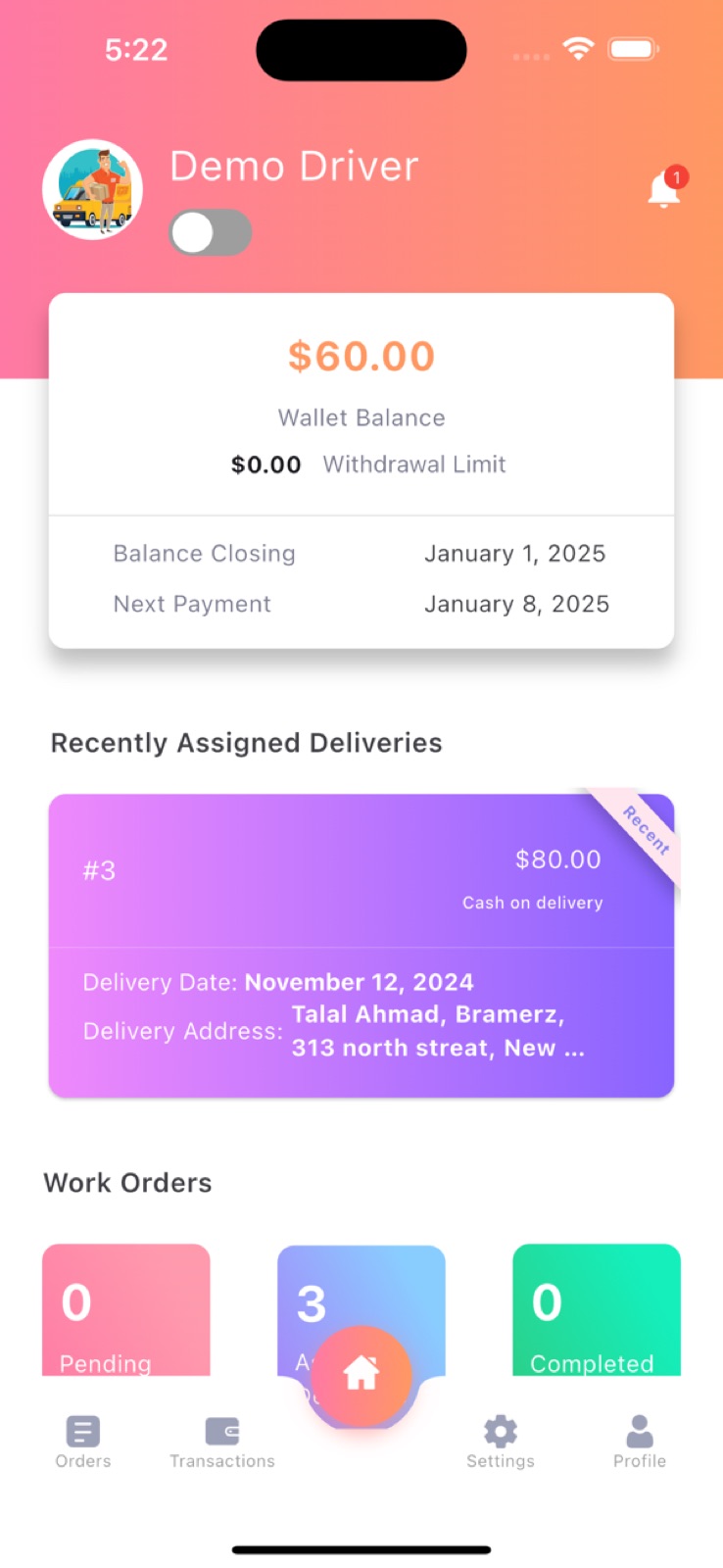 Driver home: wallet, recently assigned deliveries and work orders. Source: App Store
PocketStore by StorePulse
PocketStore takes the same idea beyond marketplaces to any single WooCommerce store. It turns an existing store into a branded native iOS and Android shopping app. The catalogue syncs with variants, galleries and stock status. Checkout supports guests, saved addresses, every configured shipping method and every active payment gateway. Customers track orders and request refunds in the app. Coupons, discount rules, sale prices, wishlists, abandoned cart reminders and push notifications carry over from the store. Onboarding is a short form, then the team builds the app and submits it to both stores under the merchant’s own developer accounts. PocketStore sits in StorePulse, the weDevs family’s suite of eCommerce tools.
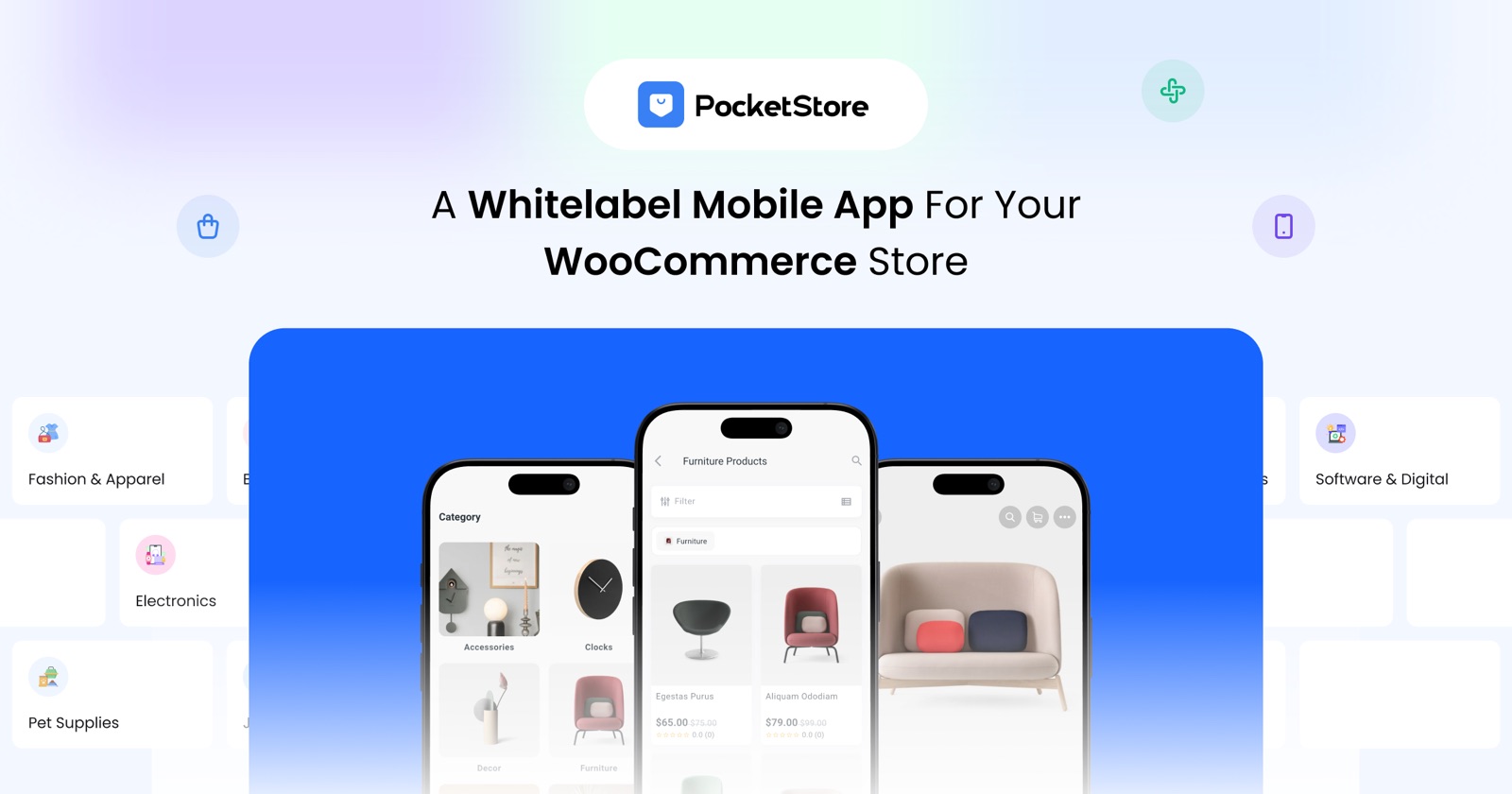 PocketStore turns a WooCommerce store into a branded app. Source: StorePulse
Industry
Mobile is where online shopping happens, but most WooCommerce merchants run on a website alone. Their options for an app are a custom build from an agency, a do-it-yourself app builder, or a managed service. Managed services such as MobiLoud, MageNative, AppMySite and AppPresser compete on price, setup effort and how well they understand WooCommerce. The choice for a small merchant usually comes down to who does the work: a builder gives tools, a managed service gives a finished app.
Marketplaces have a harder version of the problem. They need three apps, not one, because shoppers, sellers and drivers each do a different job. Most app builders focus on the shopper app, so the vendor and delivery side is where a marketplace product can stand out.
What happened
I joined Dokan in October 2024 and owned the mobile roadmap alongside the plugin. The apps moved from separate listings to a connected product line, and the same model then moved into a new product.
- Delivery Driver on the App Store (Jan 2025). Version 1.0.0 went live on iOS on 2025-01-07 for marketplaces that run their own delivery.
- A new customer app (Sep 2025). I worked with the developers to revamp the customer app. The new app launched on iOS on 2025-09-04 as version 2.0.0. By December 2025 (v2.4.0) shoppers could claim returns and warranty, chat with the seller, and buy WooCommerce Simple Auction products from the app. That brought mobile closer to what Dokan Pro already offered on the web.
- A revamped vendor app (built late 2025). I worked with the developers to rebuild the vendor app around what sellers do every day: orders, products, earnings and support. It reached the App Store on 2026-03-19, just after I handed Dokan over in February 2026. Dokan announced it on 2026-08-02 as part of a three-app set: customer, vendor and delivery driver.
- PocketStore (2026). I created PocketStore at StorePulse to bring the done-for-you app model to every WooCommerce store, not only Dokan marketplaces. The demo app went live on the App Store on 2026-05-07. The service was announced on 2026-06-15 with a $199 setup fee and plans from $39 a month.
The key decision across all four was to sell a service, not a toolkit. Owners do not design screens or manage store submissions. They fill in a form and get an app. That keeps the promise simple and puts the hard parts (builds, reviews, updates) on the team that knows the product.
Impact
- 4 white-label mobile apps in the portfolio (Oct 2024 to 2026).
- 3 apps reached the App Store with new or rebuilt versions: Delivery Driver (2025-01-07), Customer (2025-09-04) and Vendor (2026-03-19).
- Customer app shipped return, warranty and auction support within four months of launch (v2.0.0 on 2025-09-04 to v2.4.0 on 2025-12-22).
- Vendor app kept moving after launch: 12 iOS versions between 2026-03-19 and 2026-10-05.
- PocketStore went from launch to a priced service in about six weeks (demo app 2026-05-07, public pricing 2026-06-15).
Stack
- Native apps for iOS and Android, distributed through the Apple App Store and Google Play
- WooCommerce and Dokan stores as the backend, so products, stock and orders stay in sync with the website
- Google Maps for live driver location and route navigation
- Push notifications for order updates and promotions
- Payments: WooCommerce gateways, Dokan Stripe Connect, Google Pay and Apple Pay
- AppBridge integration for PocketStore (per its store listing)
How I shaped it
- Owned the app roadmaps. I ran the feature roadmaps for the Dokan apps and the Delivery Driver app, so mobile stayed in step with what shipped on the web.
- Revamped the customer and vendor apps with the developers. I worked with the engineering team on the new customer app and the rebuilt vendor app, focusing each on the jobs its user does daily.
- Treated three apps as one product. Shopper, seller and driver apps were planned as one set around the same marketplace, which is how Dokan now presents them.
- Kept white-label as the promise. Every app ships under the owner’s brand, which is what lets a small marketplace look like a bigger one.
- Created PocketStore. I took the done-for-you app model from marketplaces to single WooCommerce stores, a much larger audience, with a simple three-step onboarding and clear pricing.
How it moved on
- Jan 2025: Delivery Driver v1.0.0 live on iOS
- Sep 2025: new Customer app v2.0.0 live on iOS
- Dec 2025: Customer app adds returns, warranty and auction products (v2.4.0)
- Feb 2026: I handed over Dokan
- Mar 2026: revamped Vendor app live on iOS (v1.0.3)
- May 2026: PocketStore demo app live on iOS and Google Play
- Jun 2026: PocketStore announced with public pricing
- Aug 2026: Dokan announces the new vendor app alongside the customer and driver apps
- Oct 2026: Vendor app at v1.3.1
Links
- Dokan Customer app: product page for the white-label shopping app
- Dokan Vendor app: product page for the vendor app
- Dokan Delivery Driver app: product page for the driver app
- PocketStore: product page on StorePulse
- Introducing the new Dokan Vendor app: launch post, August 2026
- Introducing PocketStore: launch post with pricing, June 2026
- Dokan Customer on the App Store: iOS listing and version history
- Dokan Vendor on the App Store: iOS listing and version history
- Dokan Delivery Driver on the App Store: iOS listing
- PocketStore on the App Store: iOS demo app
- Dokan Customer on Google Play: Android listing
- Dokan Vendor on Google Play: Android demo listing
- Dokan Delivery Driver on Google Play: Android listing
- PocketStore on Google Play: Android demo app
- StorePulse: the weDevs family suite of eCommerce tools